We handle dynamic pricing, guests, and everything else. You just collect the payout.
Book a free 20-min call ↗
How to Price Your
Kelowna Airbnb
for Peak Season
June, July, and August are when Kelowna's earning potential is genuinely significant. Here's how to price it right when most hosts are still guessing.
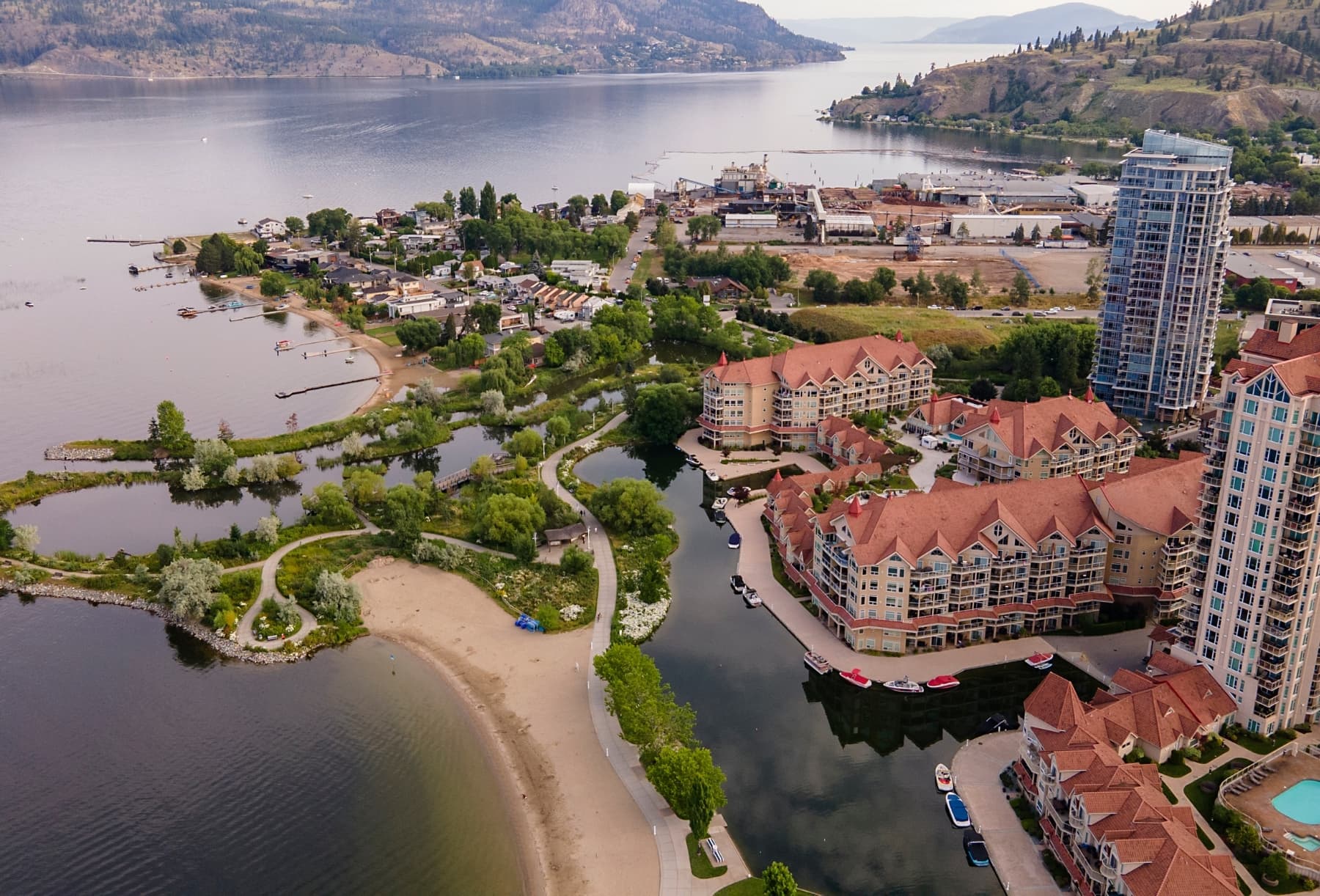
Kelowna's STR market is genuinely new. Following BC's 2024 regulatory changes, there is limited historical data to draw on. This guide gives you a framework based on comparable Okanagan markets, local demand drivers, and what we see on the ground. Use it as a starting point, not a guarantee.
If you've been trying to figure out what to charge for your Kelowna short-term rental this summer, you're not imagining the confusion. Most hosts are guessing. Most pricing guides on the internet are pulled from markets that look nothing like Kelowna. And because the regulated market here is only a couple of years old, even experienced hosts don't have a deep well of data to draw from.
That uncertainty works in your favour if you understand it. The hosts who go into summer 2026 with a real pricing strategy will significantly outperform those who set a flat rate and hope for the best. The gap between a thoughtfully priced listing and a randomly priced one in peak season can be thousands of dollars per month.
This guide covers what drives pricing in Kelowna specifically, which features command premium rates, what occupancy to realistically target, and exactly which dates you need to have locked in before June arrives.
Why June, July, and August are different
Why the Kelowna Market Is Wide Open Right Now
Kelowna is not Whistler or Banff. Those markets have decades of STR history, deep competitive pressure, and guests who know exactly what to expect. Kelowna in 2026 is something genuinely different: a fast-growing tourism destination with surging summer demand and a short-term rental market that is only beginning to mature.
A few things are true at the same time right now. Guest demand for Kelowna in summer is real and growing. Wine country tourism, Okanagan Lake, and the region's reputation as a warm-weather escape are drawing visitors from across Canada and beyond. At the same time, the number of properly licensed STR listings is still relatively low following BC's regulatory changes, which means less competition for bookings than you'd expect in a market with this much tourism activity.
That combination (high demand, constrained supply) is exactly the environment where pricing matters most and rewards most. The question is not whether you can earn well this summer. It's whether your pricing strategy is sharp enough to capture what's there.
Setting your base rate
Before you think about events and premiums, you need a sensible floor. These ranges reflect well-presented Kelowna listings in peak July conditions without major feature premiums applied. They are estimates based on the current market.
These ranges are based on observable Kelowna market conditions in 2025 and 2026 and comparable Okanagan STR markets. They are not guarantees. Your actual rate depends heavily on your specific features, review score, listing quality, and competition on any given night. The best approach is to start in the middle of your range, watch your occupancy for the first few weeks, and adjust from there.
The dates that change your rates
These are the specific windows when Kelowna demand spikes and guests accept rates far above your normal base. Not having surge pricing on these dates is the single most expensive mistake a Kelowna host can make.
BC schools end in late June, triggering a significant uptick in family bookings. Your rates should begin climbing from the 15th onward.
A consistent long-weekend demand spike. Golf, wine country, and lake days drive family group bookings. Raise rates 20 to 35%.
The Okanagan wine trail is active all summer. Guests pairing Kelowna with winery visits book from June through September.
The biggest single demand event of the Kelowna summer calendar. Book out weeks in advance. Raise rates 50 to 80% above base. June 28 through July 3 should all be at surge pricing.
Thousands of athletes, their families, and supporters descend on Kelowna. Historically one of the most significant booking events of the year. Surge price 5 days around race day. Raise rates 60 to 100%.
All of July is peak. Even mid-week nights should be priced at or near your base ceiling. Kelowna's lake and beaches are the draw and demand does not drop mid-week the way it does in city markets.
August's equivalent to Canada Day. Another 4 to 5 day surge window. Raise rates 40 to 70% above base and block off minimum-stay requirements of 3 nights.
A major classic car show drawing thousands to the Okanagan. Spillover accommodation demand reaches Kelowna throughout the event weekend.
The final surge of summer. Guests making a last Okanagan trip before school restarts. Raise rates 35 to 55%. After Labour Day, rates and occupancy drop noticeably into shoulder season.
For Canada Day, Ironman, and BC Day weekends, set a 3-night minimum stay. This prevents your calendar from being fragmented by single-night bookings on either side of the event, which are hard to fill and drive your occupancy down. A 3-night minimum on those windows is standard practice in event-heavy markets.
What occupancy to actually expect
This is where most advice falls apart. Most published occupancy numbers come from markets with years of established data. Kelowna's regulated STR market is new. Here is an honest breakdown.
The market warms up in early June and accelerates fast. A well-priced listing with good reviews should be consistently booked from mid-June onward. Early June is slower and is where competitive pricing matters most.
A well-positioned listing should be nearly full in July. If you are below 75% occupancy in July, your pricing is too high or your listing presentation needs work. This is the month to maximise revenue.
Stays strong through BC Day and the long weekend crush. Mid-August can soften slightly before Labour Day picks back up. Longer minimum stays in early August can increase average booking value even if occupancy dips slightly.
These ranges are informed estimates, not guarantees. Kelowna's regulated STR landscape is genuinely new and the data pool is still shallow. Your actual occupancy will depend on your listing quality, pricing agility, review score, the number of competing listings in your building and neighbourhood, and how the broader Canadian travel market behaves in summer 2026.
The most important thing you can do is treat your first peak season as a learning exercise. Track what you earn, what booked fast, what sat empty, and what guests praised or complained about. That data is worth more than any estimate in this guide.
Dynamic pricing: what it actually does
Manual pricing means you set a rate and hope. Dynamic pricing means your nightly rate moves automatically based on demand signals, competitor availability, and how far in advance someone is booking.
- A large local event is announced or fills competing hotels
- Your calendar has open dates within 7 days (drop rate to fill)
- Competing listings in your area get booked up (increase rate)
- A weekend is filling up 60+ days in advance (demand signal)
- Seasonal demand patterns from prior years
You set $280/night and leave it. On a Tuesday in mid-June you're overpriced and empty. On Canada Day weekend you're underpriced and someone else is charging $550 for the same unit in the same building.
$210 on a slow mid-June Tuesday fills the calendar. $520 on Canada Day weekend is accepted without hesitation. The average comes out well above your flat rate with higher total occupancy.
What you could realistically earn
These are conservative-to-mid estimates for the three peak months combined. They assume professional listing presentation, dynamic pricing, and a listing that's been live long enough to have reviews.
| Unit type | July revenue est. | Jun+Jul+Aug est. |
|---|---|---|
| Studio / 1BR, no view | $5,100–6,200 | $12,000–16,000 |
| 1BR with lake view or patio | $7,600–9,600 | $18,000–25,000 |
| 2BR, waterfront building | $10,300–14,200 | $24,000–35,000 |
| 2BR with lake view + patio | $13,400–17,700 | $30,000–45,000 |
| 3BR, premium features | $17,000–23,500 | $38,000–58,000 |
Estimates only. Actual revenue depends on listing quality, review score, competition, and pricing strategy. Figures are gross revenue before platform fees, management, cleaning, and other costs.
Airbnb and VRBO take 3% host fees. A property manager takes 15 to 20%. Cleaning costs per turn. Supplies, maintenance, and licensing fees add up. A $30,000 gross summer is more like $20,000 to $22,000 net after costs.
Peak season (June, July, August) typically represents 45 to 55% of annual STR revenue in Okanagan markets. Your shoulder and off-peak strategy matters too, but summer is when the foundation gets built.
Pricing mistakes that cost you most
One rate for all of July leaves thousands on the table on event weekends and pushes away bookings on slower nights when a lower rate would fill the gap.
Canada Day and Ironman dates are known months out. If you haven't raised your rates before guests start booking those weekends, you'll get locked in at your base rate for the highest-demand nights of the year.
Your rate should be driven by what the market will pay, not backward from what you need to cover costs. If your "need" rate is above what the market will bear, that's a different problem and pricing higher won't solve it.
A 4.6-star listing and a 4.9-star listing can charge meaningfully different rates for the same unit. Reviews are leverage. Every positive guest interaction you create now compounds into higher rates next season.
Without a 3-night minimum over Canada Day or BC Day, guests cherry-pick July 1st alone and your calendar gets fragmented on either side with gaps that are very hard to fill last minute.
A new listing with zero reviews will struggle to get bookings at competitive rates in peak season. Aim to launch in April or May, get your first few guests, and collect reviews before the summer wave hits.
Frequently asked questions
How much can I charge for my Kelowna Airbnb in July?
A well-presented one-bedroom can realistically earn $200 to $310 per night in July as a base rate. Add a lake view or patio and that moves to $280 to $380. A two-bedroom with strong features and a waterfront location can push $380 to $600+. Event weekends like Canada Day and Ironman add another 50 to 80% on top of those figures.
Does a lake view actually make a difference to what I can charge?
Yes, significantly. Lake view is the most-searched feature filter in Kelowna on both Airbnb and VRBO. Guests actively seek it and will pay 20 to 40% more than a comparable unit without it. It also drives earlier bookings, which means you fill your calendar faster and have more pricing power over latecomers.
Should I price higher for Ironman Canada weekend?
Absolutely. Ironman Canada is one of the highest-demand single events on the Kelowna calendar. Thousands of athletes and their support networks need accommodation. Hotels fill weeks out and STRs capture significant overflow demand. Raise your rates 60 to 100% above your July base for the 4 to 5 days around race weekend and set a 3-night minimum stay. Confirm the exact date for 2026 early so you have surge pricing in place before the first bookings come in.
How do I know if my pricing is too high or too low?
Watch your booking window and occupancy. If you're filling 4 to 6 weeks in advance with almost no gaps, you're likely priced too low and could push rates up. If you're at 60% occupancy in July with open nights across the calendar, your rate is too high for current demand. The sweet spot is filling at roughly 85 to 90% with bookings coming in 2 to 4 weeks out in peak season.
Is it worth hiring a property manager just for pricing?
Most property managers include dynamic pricing as part of their service, so you're not paying separately for it. Whether the overall cost is worth it depends on how much your time is worth. For owners who want to be fully hands-off, a good local manager will typically earn back their fee in improved revenue optimisation, higher occupancy, and better guest experience. Simply Hosted Kelowna manages pricing as part of our full-service 20% flat fee.
Don't leave peak season
money on the table.
Pricing a Kelowna STR well is not a one-time task. It requires watching the calendar, tracking competitor availability, updating rates before major events, and adjusting for last-minute gaps. Most owners either don't have time for it or don't know what signals to watch.
We use professional dynamic pricing tools and manage rates actively across all our listings throughout peak season. Our owners don't touch their calendars. They just receive a monthly statement.
PriceLabs-powered pricing, event surge management, and last-minute gap fills. All included in our fee, no add-ons.
We're in the Kelowna market every day. We know which events move rates, which buildings have the most competition, and when to push versus hold.
We get new listings live in 7 to 10 days. If you sign on in May, you'll be earning in June.
A clear statement every month. Bookings, revenue, expenses, payout. You always know exactly what your property earned.
This summer is the
right time to be listed.
High demand, constrained supply, and a market still figuring itself out. The hosts who go in prepared will have a significant advantage.